
Emergency Backup Power
Emergency Backup Power for UK Homes
Keep selected essentials running during a power cut. Compare compact UPS options and larger portable power stations by output, runtime and the appliances you need.
Not sure which size you need? Use the Power Calculator.
-
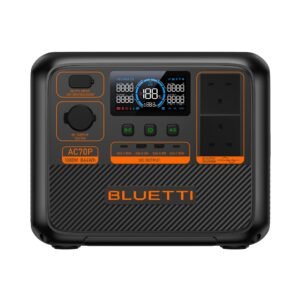
BLUETTI AC2P – Compact 300W Portable Power Station for Travel & Backup to Pinterest (opens in a new window)


-


-


-

-
-

-


-
BLUETTI AC180P – 1800W Home Backup Power Station for UK Power Cuts to Pinterest (opens in a new window)


Power-cut preparation
Preparing for shorter UK power cuts
An emergency power kit is most useful when it is planned around a short, practical list of devices. Start with communication, light and connectivity, then decide whether any larger appliance is essential enough to justify a higher-output, higher-capacity system.
Prioritise essential devices
Phones, LED lighting, Wi-Fi equipment, laptops and small electronics usually consume less energy than heating or cooking appliances. Keeping the first group available can make a short outage easier to manage without using the battery on high-demand loads.
Separate power from runtime
Output determines whether connected equipment can run safely at the same time. Capacity influences how long the stored energy may last. Both need checking, and actual runtime depends on the devices used, their duty cycles and conversion losses.
Know when to step up
If your plan includes refrigeration or equipment with a motor, account for startup demand as well as normal wattage. Higher-power appliances may need a larger station, while some requirements may exceed a practical portable setup.
Keep charging cables accessible and test ordinary, non-critical loads before an outage so you understand the controls and connections. Store the system according to its manual and review its charge level periodically rather than assuming it is ready.
Estimate your essentials with the Power Calculator, compare the wider portable power station range, or consider solar-supported kits for flexible daylight charging.