
How to Choose the Right Portable Power Station | VoltReady™ UK Guide
Portable power stations can provide useful backup for UK homes, campervans and workshops, but the right size depends on the equipment you want to run and for how long. Start with your real load rather than a model name or headline wattage.
This guide explains capacity, output, charging, portability and expansion so you can compare the current range without relying on outdated model recommendations.
🔋 What Is a Portable Power Station?
A portable power station is a rechargeable battery system that stores electricity for later use — think of it as a quiet, clean alternative to a generator. It can power or charge multiple devices through AC, USB, or DC ports, with no fumes or noise.
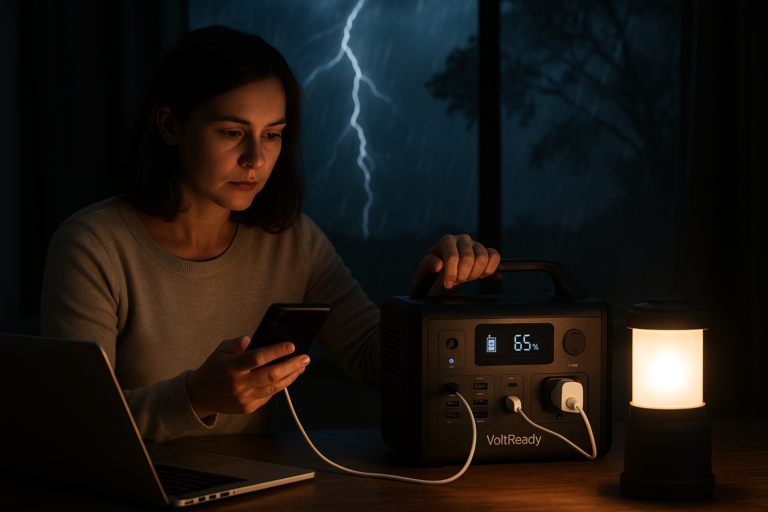
- Home backup during power cuts
- Vanlife, camping, and travel
- Work sites or outdoor jobs
- Emergency preparedness
💡 Key Factors to Consider
1) Capacity (Wh)
The watt-hour (Wh) rating shows how much energy the unit can store.
- 200–600Wh: communications, LED lighting, charging and shorter laptop use
- 600–1200Wh: longer laptop use, travel equipment and selected refrigeration where output and surge are suitable
- 1200Wh and above: broader home essentials, longer runtimes and higher combined loads
Tip: Add the wattage of the devices that must run together, estimate the required hours and keep a practical reserve for conversion losses, cycling loads and changing conditions. The Power Calculator provides a useful starting point.
2) Output Power (Watts)
This determines what devices you can run simultaneously. Check continuous output and start-up demand against the equipment labels. High-wattage heating and cooking appliances can consume a small battery quickly even when the inverter can start them.
3) Charging Speed & Solar Input
Compare mains charging time, the supported solar-input range and connector compatibility. Solar output varies with season, weather, orientation and available daylight, so it should not be treated as guaranteed continuous power.
4) Portability & Weight
Compact models (<7 kg) are great for travel. Larger systems are better suited for home backup or campervan installs.
5) Expandability
Expansion can be useful when your runtime requirement may grow. Check the exact compatible battery, system limits and total cost. Inverter modules such as the AC300 do not contain an internal battery and cannot operate as standalone power sources.
🚐 Real-Life Scenarios
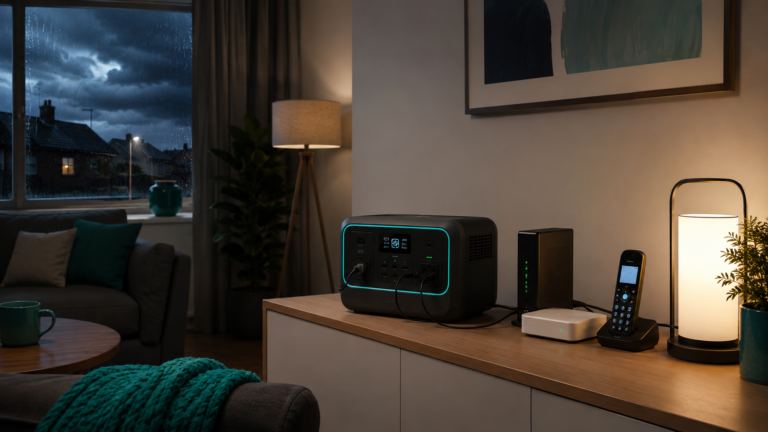
🏠 Low-power communication backup
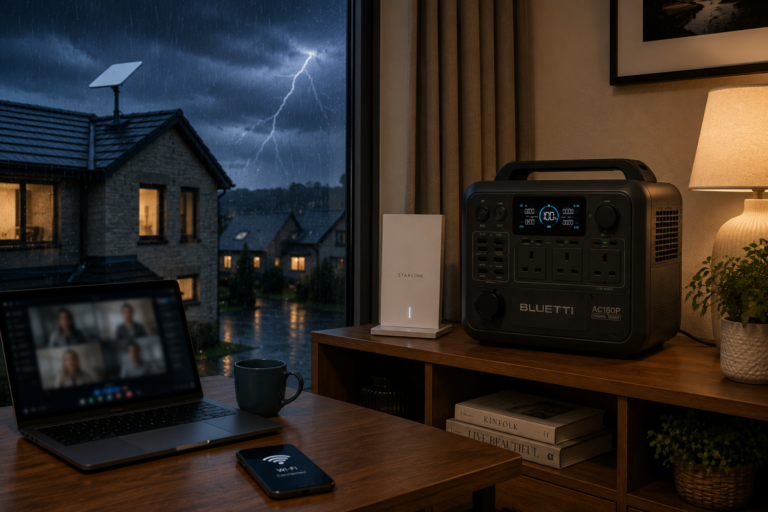
Start with the router, fibre ONT or modem, phones and selected LED lighting. Confirm the combined load and test the complete setup before a power cut.
See the Wi-Fi power-cut guide and compare the compact BLUETTI AC2P.
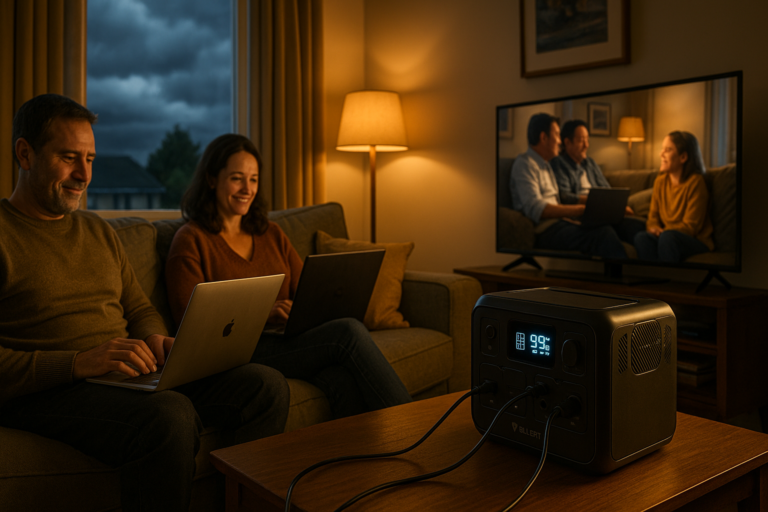
🚐 Compact travel and short outages
Prioritise low weight, suitable outputs and realistic runtime for cameras, laptops, lighting and compatible travel equipment.
For a model-specific example, review the AC2P router, laptop and lighting runtime guide.
🏠 Broader home essentials
Refrigeration, several devices or longer outages require more capacity and enough surge headroom. Check the actual appliance labels and avoid assuming that one model suits every household.
Use the Power Calculator or browse Emergency Kits for a more structured comparison.
🌍 Why Choose VoltReady™?
- ✅ UK-focused guidance — practical advice for power cuts, travel and portable use
- ✅ Clear product status — check the current product page before relying on availability
- ✅ Realistic sizing — capacity, output and runtime considered together
- ✅ Useful comparison routes — calculator, product pages and emergency-kit collections
🛒 Ready to Find Your Perfect Match?
Compare models in our Portable Power Collection — or try the VoltReady™ Power Calculator to estimate your setup.