
UK Energy Volatility in 2026: Why More Homes Want Backup Power
UK energy prices may move up or down, but for many households the bigger issue in 2026 is predictability.
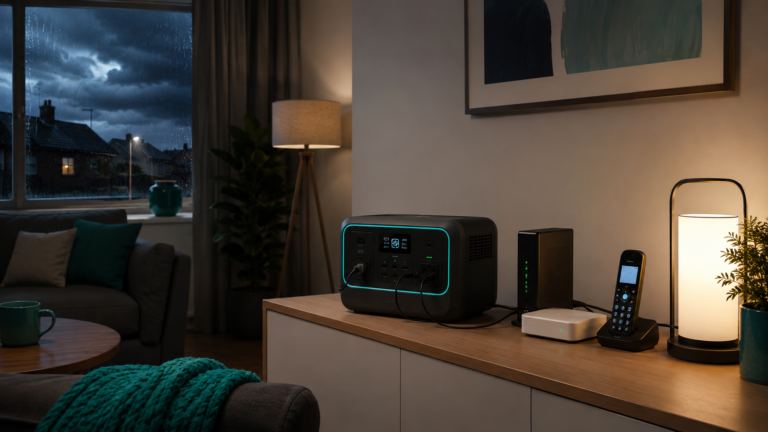
When power feels less certain, even short outages can disrupt daily life faster than people expect. Wi-Fi drops out, phones need charging, laptops stop, lights go off and everyday routines become harder than they should be.
That is why more households are now asking a practical question: if the grid goes down, what is my backup plan?
In this guide, we break down why energy uncertainty still matters in 2026, what a power cut actually interrupts at home, and what type of home backup power makes sense for real UK households.
Why Energy Volatility Still Matters in 2026
Preparedness is not only about whether prices are up or down this month. It is about how quickly conditions can change and how exposed households feel when energy becomes harder to predict.
For many buyers, the issue is not just cost. It is resilience. Homes now rely on electricity for internet access, remote work, device charging, lighting, communications and a growing number of everyday systems. That means even short interruptions can feel much more disruptive than they once did.
The mindset has shifted. More households are no longer looking at backup power as a niche product for campers or off-grid users. They are starting to see it as practical home infrastructure.
What Is Actually Worth Backing Up at Home?
Most households do not need extreme whole-home backup. They need a practical way to keep the essentials running long enough to stay connected, comfortable and organised.
For many homes, that means prioritising:
- Wi-Fi routers and broadband equipment
- Phones and charging cables
- Laptops and work devices
- Lighting in key rooms
- Selected kitchen essentials
- Some heating controls or supporting systems
That is why choosing the right system is less about buying the biggest unit available and more about buying a setup that covers the essentials well.
How Global Instability Can Affect UK Homes
Energy markets do not need a full-blown domestic crisis to make people uneasy. International disruption, supply concerns and wider economic pressure can all feed into how households think about bills, affordability and preparedness.
For UK homeowners, that can show up in very practical ways:
- More concern about future household energy costs
- Higher sensitivity to outages, winter disruption and seasonal demand
- Greater focus on keeping essential devices powered at home
- Stronger interest in practical backup options before pressure increases
That does not mean panic. It means planning ahead while you still have time to compare options calmly.
What a Power Cut Really Interrupts
Many people do not realise how much of everyday life stops the moment mains power disappears.
Even a relatively short outage can interrupt the basics:
- Lighting in key rooms
- Wi-Fi and broadband access
- Phone charging
- Laptops and work devices
- Small kitchen essentials
- Entertainment and communication tools
- Some heating controls or supporting systems
For households with children, remote workers, rural homes or anyone who simply wants a calmer backup plan, that disruption matters more than ever.
Why More Households Are Preparing Earlier
Preparedness is becoming more mainstream for a simple reason: modern portable power is easier to own than older fuel-based backup options.
Today’s systems are quieter, cleaner and simpler to store. They can be charged in advance, used when needed and paired with solar if you want more flexibility. That makes them relevant not only for emergencies, but also for campervans, leisure use and everyday peace of mind.
- Confidence is lower: people are less willing to assume uninterrupted power is guaranteed
- Homes are more power-dependent: broadband, work devices and smart systems all rely on electricity
- Modern solutions feel more practical: portable power is easier to use than many people expect
- Buyers want control: having backup power reduces vulnerability when disruption happens
What Type of Backup Power Do You Actually Need?
One of the biggest mistakes buyers make is thinking they need either the smallest possible option or a huge overbuilt system. In reality, the right answer depends on what you want to power, for how long, and how much reassurance you want at home.
Phones, Lights and Routers
Best for shorter interruptions where the priority is keeping communications, charging and a few basic essentials running.
Everyday Home Backup
Best for households that want stronger support for Wi-Fi, laptops, communications and selected household essentials.
Longer Runtime and More Margin
Best for households that want more runtime, stronger coverage and a more prepared setup for extended disruption.
| Need | Smaller Unit | Mid-Range Home Backup | Higher-Capacity Backup |
|---|---|---|---|
| Phones and Wi-Fi | Good | Excellent | Excellent |
| Laptops and work devices | Limited | Strong | Strong |
| Short fridge backup | Weak | Good | Better |
| Portability | Best | Balanced | Lowest |
| Cost | Lowest | Mid-range | Highest |
If you are unsure where to start, the smartest first step is to use our UK backup power calculator. It helps you estimate the right setup for your home without overcomplicating the process.
Why Portable Power Makes Sense for Modern Homes
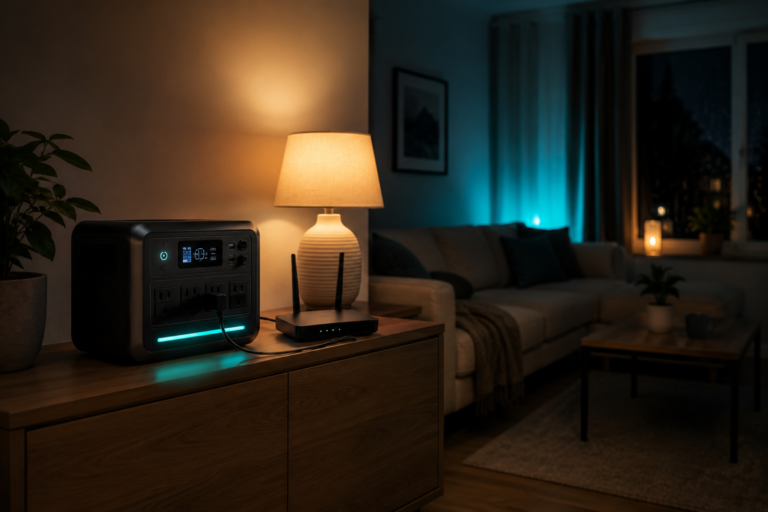
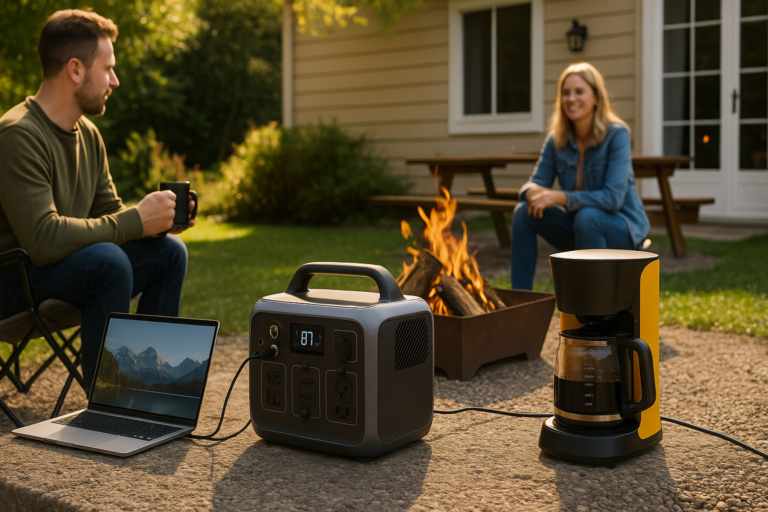
A quality portable power station is not designed to replace your home electricity supply. It is designed to give you a practical backup when you need it most.
- Keep essential devices running during outages
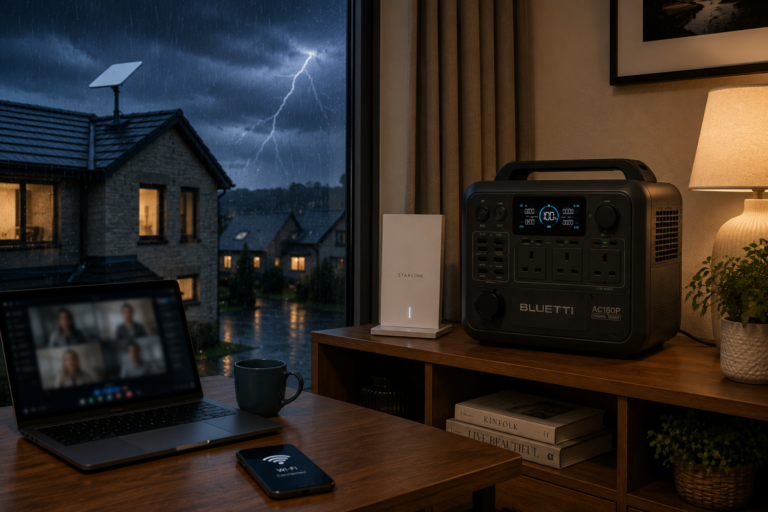
- Support home broadband, phones and work continuity
- Reduce stress when the grid goes down unexpectedly
- Use the same system for home backup, travel and off-grid flexibility
- Enjoy a quieter, cleaner alternative to fuel-based generators
For many households, the real value is not just in watts or battery size. It is in confidence.
Build a Backup Plan Around Real Loads
A useful shortlist begins with the equipment that must run together and the hours it needs to operate. Compact, everyday, mid-range and higher-capacity options each have a role.
Compact and everyday backup
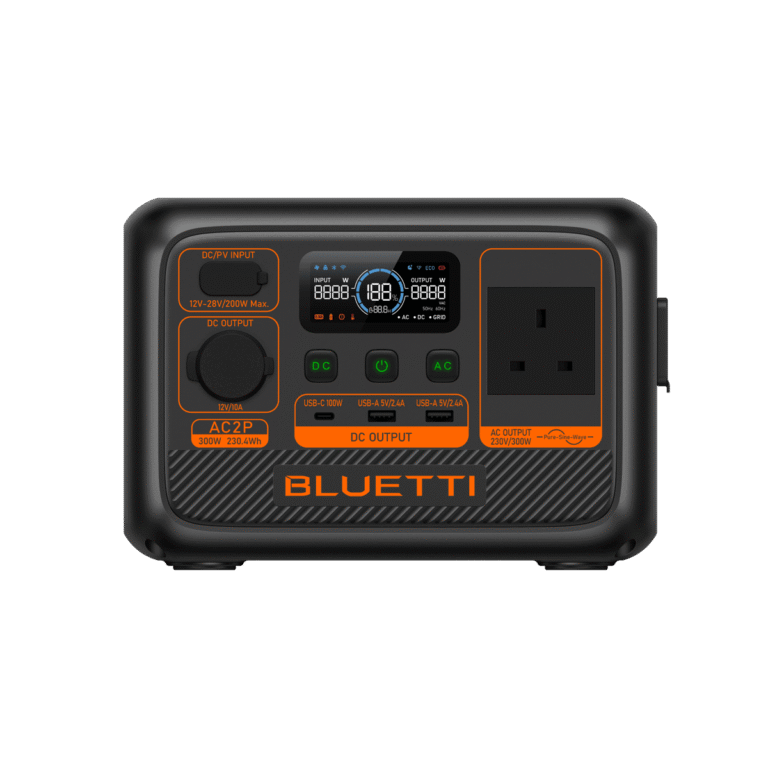
Compare the BLUETTI AC2P for modest essentials and the BLUETTI AC60P when you need more capacity and output headroom.
Mid-range household backup
The EcoFlow DELTA 3 offers a stronger mid-range route for larger combined loads and longer planned runtime.
Higher-capacity planning
Compare the BLUETTI AC200PL and EcoFlow DELTA 3 Max after checking running power, start-up demand and the target hours.
No portable unit should be treated as automatic whole-home backup. Use the Power Calculator as a planning aid and check each appliance against the chosen product.
When Is the Right Time to Prepare?
The best time to plan backup power is before you urgently need it.
Once disruption dominates headlines, more people begin researching at the same time. That can make comparison harder, increase pressure on stock for popular models and leave buyers making rushed decisions.
Planning earlier gives you more space to compare products properly, understand your needs and choose a setup that actually fits your household.
A Smarter Way to Think About Home Resilience
The modern approach to preparedness is not about fear. It is about having a practical layer of backup that makes your home less vulnerable when the unexpected happens.
You do not need to go fully off-grid to improve resilience. In most cases, you simply need a solution that helps keep your essentials running, your communication lines open and your household more comfortable when the grid is under pressure.
Backup power is no longer just a leisure accessory. For many households, it is becoming a practical part of home planning.
Explore the Right Backup Power Setup with VoltReady
If you are comparing options now, VoltReady makes it easier to choose a setup that fits your home, budget and confidence level.
- Use our UK backup power calculator
- Explore portable power kits
- Compare portable power stations
- Read the UK Storm and Power-Cut Guide
Choose capacity and output from the equipment you have measured, not from a single headline recommendation. Keep reserve for conversion losses, cycling loads and changing conditions.
Final Thoughts
In 2026, the real issue for many households is not just price. It is predictability.
When energy feels less certain, having a practical backup plan matters more. A quality portable power station offers reassurance, flexibility and a calmer way to handle the unexpected at home.
If you want to prepare your home with more confidence, now is a smart time to compare your options and choose a setup that fits.
Start with the Right Setup
Compare your options, size your needs properly and choose backup power that fits your home with confidence.